If you're a Bay Area homeowner thinking about building an accessory dwelling unit (ADU), the first question is almost always the same: what's this actually going to cost me? It's a fair question — and one that's surprisingly hard to get a straight answer to. Most contractors either dodge it or quote a vague per-square-foot number that falls apart the moment you dig in.
So here's the honest breakdown of ADU construction cost in the Bay Area for 2026. At California Bay Builders & Remodeling, we've designed and built ADUs across the greater Bay Area, and this guide lays out exactly what you'll pay — by size, by type, the hidden costs nobody mentions, the 2026 rule changes in your favor, and whether an ADU can actually pay for itself. If you're ready to talk specifics, you can always see our full Bay Area ADU builder guide or book a free consultation — but first, let's talk numbers.
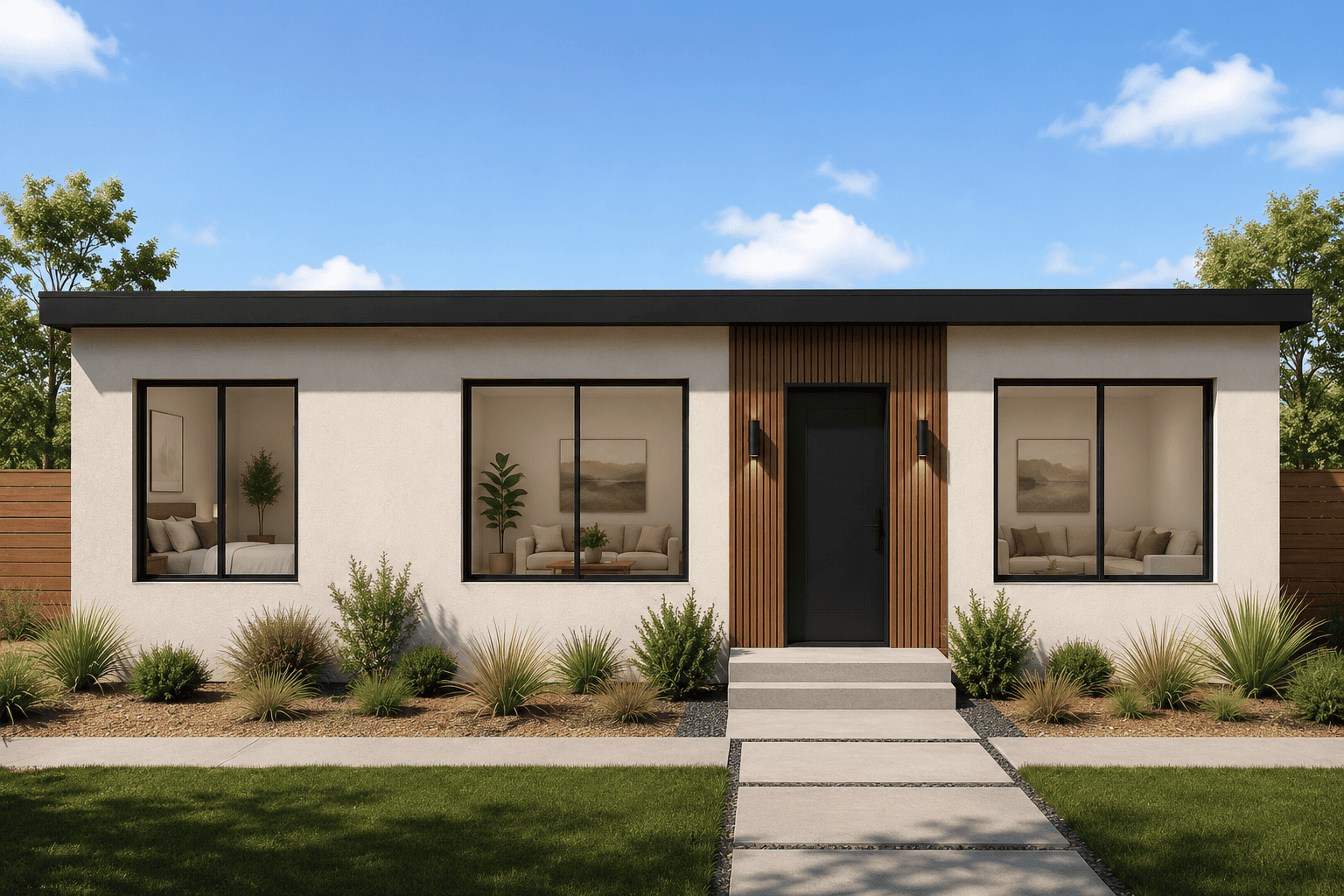
For a fully custom, permitted ADU in the Bay Area, most homeowners spend somewhere between $165,000 and $540,000+ depending on size, type, and finishes. That's a wide range — because "an ADU" can mean anything from a compact 350-square-foot studio to a 1,200-square-foot three-bedroom home in your backyard.
ADUs have become a major part of Bay Area housing — accounting for 13.4% of the region's housing permits. The reason costs vary so much is that an ADU is a complete, self-contained home: foundation, framing, roof, plumbing, electrical, HVAC, a kitchen, and a bathroom — all built to California code. The bigger and more finished it is, the more it costs. You can see real examples in our Bay Area project gallery.
Here's context most cost guides skip. Nationally, ADUs run about $150–$300 per square foot. In Silicon Valley and the greater Bay Area, that number climbs to roughly $350–$650 per square foot in 2026 — nearly double the national average. That's not contractors padding numbers. It comes down to three real factors unique to our region:
• Bay Area labor costs — skilled trades here command Silicon Valley wages, and quality ADU work requires experienced crews.
• Seismic engineering — California's earthquake code requires structural engineering and foundation work many other states simply don't.
• Premium materials and permitting — material costs and city permit requirements here sit well above national norms.
Here's where our ADU pricing starts by model. These are real, custom, permitted builds — not factory boxes dropped on your lot. And unlike many builders, our package price already includes your full blueprints, structural engineering, and Title 24 energy calculations — not just the construction. Here's what each model starts at:
| Size | Type | Starting At |
| 350 sq ft | Studio | $165,000 |
| 499 sq ft | 1 Bed / 1 Bath | $235,000 |
| 650 sq ft | 2 Bed / 1 Bath | $300,000 |
| 800 sq ft | 2 Bed / 2 Bath | $372,000 |
| 1,000 sq ft | 3 Bed / 2 Bath | $450,000 |
| 1,200 sq ft | 3 Bed / 2 Bath | $540,000 |
One important note on cost per square foot: it's a trap. A small garage conversion or studio can actually cost more per square foot than a large detached unit, because the expensive parts — the kitchen, the bathroom, the utility hookups — don't get cheaper just because the building is smaller. Judge an ADU by its all-in number for the size you want, not a per-foot average.

One of the biggest factors in your total is simply which city you're in. Costs run highest in premium markets like Palo Alto, Saratoga, and Los Altos, where builds can run 15–25% above other South Bay areas. More accessible markets sit at the lower end of the range. A few city-specific costs worth knowing before you budget:
• Hillside & wildfire zones — sloped lots or high fire-severity zones commonly add 10–15% to the total build.
• Utility connection distance — a unit 20 feet from your home is far cheaper to connect than one 80 feet back on a deep lot; connections typically run $5,000–$20,000.
• Fee waivers — good news: construction, connection, and impact fees are generally waived on ADUs under 750 square feet.
This is exactly why a real number requires looking at your lot, your city, and your access — not a per-square-foot average. Our Bay Area ADU builder page covers our full model lineup and process.
Not all ADUs are the same, and the type you choose shapes both your cost and how you'll use the space. Here are the four main options:
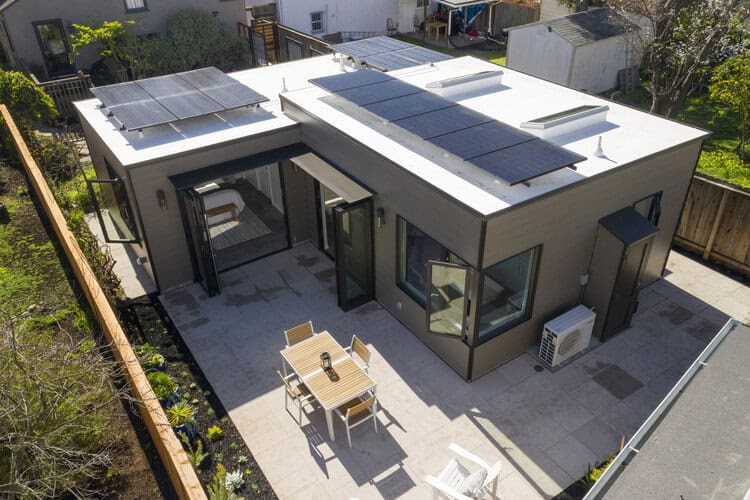
• Detached ADU — a standalone home in your backyard with its own foundation, utilities, and private entrance. It offers the most privacy, the most design flexibility, and the strongest rental income and resale value. Because it's a complete home built from the ground up, it's typically the largest investment of the four.
• Attached ADU — shares a wall with your main home. By tying into some existing structure and utilities, it can come in below a fully detached unit, though it offers a bit less separation and independence.
• Garage conversion — turns an existing garage into a livable unit. Since the foundation, walls, and roof are already in place, it's often the more budget-friendly route — the trade-off is giving up your garage, and older structures sometimes need upgrades to meet current code.
• Junior ADU (JADU) — a compact unit up to 500 square feet created within your home's existing footprint, such as converting a bedroom with its own entrance. It's the smallest and most affordable option, though it typically shares some systems with the main house.
We design and build all four across the greater Bay Area. During your consultation, we'll walk your property and help you decide which type fits your lot, your budget, and how you plan to use the space — then give you a real number for that specific plan.
Two things drive where and how big your ADU can be — and both changed in your favor recently. First, setbacks: across California, ADUs generally require a minimum 4-foot setback from side and rear property lines. If you're converting existing space — like a garage — those setback rules typically don't apply at all.
Second, size: a 2026 state law change (SB 543, effective January 1, 2026) means cities can no longer cap your ADU below 850 square feet for a studio or one-bedroom, or below 1,000 square feet for a two-bedroom-or-larger unit. Cities can be more generous, but they can't restrict you below those floors — giving homeowners more buildable square footage than they had even a year ago.
Here's a piece of good news most homeowners don't know: your ADU does not require fire sprinklers unless your main house already has them. California state law (Gov. Code §66314) is explicit — building an ADU can't trigger a sprinkler requirement, and it can't force sprinklers into your existing home either. If your house was built without them, your ADU generally won't need them. That single rule saves homeowners thousands.
When sprinklers ARE required (for example, if your main home already has them), the system itself runs about $6,000–$12,000 installed — but the real cost is water supply. If your existing meter and service line can't deliver the required flow, the utility makes you upsize them, and the total can climb past $20,000. A good builder designs around this from day one so it's never a plan-check surprise.
Wildfire (WUI) zones are the other big variable. If your property sits in a High or Very High Fire Hazard Severity Zone, California's Wildland-Urban Interface code applies — and as of January 1, 2026, that means WUI-compliant vents, Class A fire-rated roofing, and fire-resistant exterior materials like non-combustible siding and tempered-glass windows. These requirements are non-negotiable and typically add 10–15% to the build — which is why knowing your fire zone before you design matters. We check it as part of every feasibility review.
This is where a lot of ADU quotes get slippery — a low number often looks great until you see what it leaves out. Here's how we structure our packages, so you know exactly what your number covers. Notably, unlike many builders who price plans as an add-on, our packages include your full blueprints, engineering, and energy calculations.
Included in the build price:
• Labor and rough materials — the full structural build
• 3D design package with your selected interior finishes
• Full blueprint plans and elevations
• Title 24 energy calculations
• Structural engineering calculations
Priced separately:
• City permits and fees
• Finish materials (flooring, cabinets, countertops, tile, fixtures) and appliances
• Soil reports and special inspections
• Fire sprinklers (when required)
• Site-specific work — utility connections, grading, and unusual lot conditions such as hillside or fire-zone requirements
A quick note on special conditions: if your lot needs extra engineering — say a hillside site or a wildfire zone that requires additional plans or fire-resistant design — that's quoted separately based on your specific property. You'll see every item broken out in a line-item proposal before you sign anything, so there are no surprises. See our full design-build services for how we handle every stage under one roof.
This is the question that actually matters, and almost nobody answers it with real numbers. So let's run an honest example — a real scenario with 2026 financing.
The build: a 650 sq ft, 2-bedroom detached ADU. Build cost: $300,000 — roughly $340,000–$350,000 all-in once you add permits and finishes.
The financing: a renovation HELOC that lends against your home's after-renovation value. As of early 2026, renovation HELOC rates run roughly 6.6%–7.5%. On $350,000 at ~7%, a fully amortized payment lands around $2,300–$2,700/month — and many renovation HELOCs offer interest-only payments during the draw period, which is lower still.
The income: a 2-bedroom ADU rents for $3,300–$3,400/month — often more in premium areas.
The result: your rent covers your entire loan payment and puts roughly $600–$1,000 in your pocket every month — from month one. You're not waiting years to "break even." On a financed ADU with a tenant, you're cash-flow positive almost immediately. The tenant is effectively paying off your loan while you keep the difference.

Here's the part that makes an ADU genuinely different from any other investment. To generate rental income the traditional way, you'd have to buy a second property — which means a $1M+ purchase, a second mortgage, a down payment of hundreds of thousands, transfer taxes, and a competitive bidding war just to get in the door.
An ADU skips all of that. You already own the land. There's no property to buy, no lot to bid on, no second down payment. You're adding a rental unit to real estate you already hold — at a fraction of the cost of buying another home, in the same neighborhoods where a separate investment property would cost seven figures. Dollar for dollar, an ADU is one of the most efficient ways a homeowner can create rental income and long-term equity at the same time.
And the flexibility compounds it: rent it long-term for steady income, house family and skip the rental market entirely, or use it as a home office or guest suite that still adds resale value. One build, multiple ways to win — all without buying a single additional square foot of land.
Cash flow is only half the return. The other half is resale value. A permitted, well-built ADU typically adds $150,000–$300,000+ to a Bay Area property's value — banked the day it's finished. So a large share of your build cost converts straight into home equity immediately, before you've collected a single rent check. Put it together and an ADU gives you three returns from one build: monthly cash flow, a loan your tenant pays down, and an immediate jump in property value.
Most homeowners don't have $300,000 sitting in the bank — and you don't need to. The problem with traditional financing is the equity wall: standard loans only lend against what your home is worth today, not what it'll be worth once your ADU is built.
That's why we partner with RenoFi, whose HELOC lends against your home's after-renovation value — so you can access far more than a traditional loan allows. We're also a registered GoGreen Financing contractor, giving you additional financing paths for energy-efficient builds. The right structure depends on your situation, and we'll walk you through the options during your free consultation.
California has opened up ADU laws significantly in recent years. State ADU law now guarantees a path to approval for qualifying units, and every city must review a complete application within 60 days. The statewide framework is defined in California Government Code §65852.2, with recent legislation continuing to expand heights, sizes, and approval rights in homeowners' favor. Because these rules shift city to city and change often, we handle the entire permit process for you: plans, submissions, city approvals, and inspections. For the full statewide breakdown, the California HCD ADU Handbook is the definitive guide.
The honest answer to "what does an ADU cost?" is that it depends on your lot, your size, and your finishes — but with a transparent, line-item proposal, you'll know your number before anything starts. At California Bay Builders & Remodeling, we design and build custom ADUs across the greater Bay Area — engineered for your lot, permitted properly, and finished to a high standard from the ground up. Learn more about our team or see what homeowners say on our testimonials page.
Explore our full Bay Area ADU builder guide, or see how we approach kitchen and bathroom remodels too. When you're ready to talk real numbers for your property, book a free consultation — no pressure, no obligation.
Or call (800) 209-0051 — we'll tell you honestly what's possible on your lot.